The raw materials used in propagation media play a much bigger role in an operation than most growers give them credit for. While the horticultural industry has adopted plenty of high-tech solutions, the fundamental interaction between root cells and the growing substrate is still governed by natural processes that have evolved over millions of years of plant development.
Regardless of the technological advancement, plants’ roots will respond best to materials that work with their natural biology, not against it.
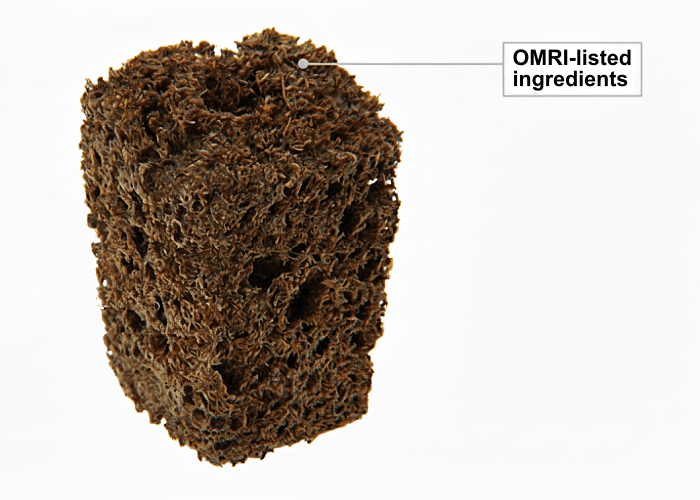
What sets natural raw materials apart from their synthetic counterparts is their unique composition. For instance, IHORT’s Q and Excel Plugs contain biological compounds and structural properties that roots recognize and thrive with. This results in stronger plant development, better disease resistance, and more efficient resource use than synthetic alternatives can deliver.
Beyond Structure: The Biochemistry of Growing Media
We’ve discussed the differences between natural and synthetic media types, so now we’ll examine the deeper biochemical and microbiological properties that make naturally occurring raw materials fundamentally superior for plant development.
The Living Nature of Raw Media
The naturally occurring materials used in propagation media aren’t merely inert physical structures used to support plants, but complex biological matrices containing:
- Bioactive compounds that stimulate root development.
- Lignins and cellulose that decompose at rates beneficial to growing plants.
- Naturally occurring humic and fulvic acids that enhance nutrient availability.
- Microbial habitats that support beneficial bacteria and fungi.
- Plant-derived compounds that can communicate with root systems.
The Artificial Limitation of Synthetic Media
Synthetic options are engineered for consistency and convenience, but unfortunately, they sacrifice the biological complexity that has supported plant growth for thousands of years. Despite technological advances, they remain fundamentally limited by their:
- Biologically inert composition that lacks growth-stimulating compounds.
- Uniform structure that fails to mimic the complexity of natural root environments.
- Absence of natural microbial colonization sites.
- Chemical homogeneity that cannot replicate organic decomposition cycles.
- Petroleum-based compositions that plants have never encountered in evolutionary history.
The Molecular Advantage: How Natural Raw Materials Transform Plant Physiology
Water Relations
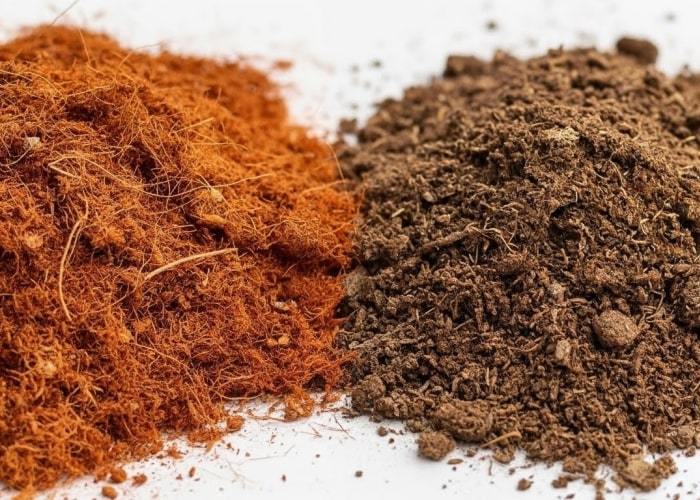
At a molecular level, natural materials interact with water in ways that synthetic alternatives simply cannot. The plant-derived cell walls in coconut coir and peat have evolved and developed water-binding properties that manage moisture in living systems.
This translates to:
- Hygroscopic surfaces that naturally attract and hold water molecules at ideal tensions.
- Biologically optimized pore distribution that maintains perfect air-to-water ratios.
- Water release curves that match plant uptake needs during different growth stages.
- Natural hydration gradients that promote proper root development and exploration.
- Organic compounds that act as natural surfactants for ideal water distribution.
Plants respond to these natural water dynamics by developing healthier root architecture with more efficient uptake systems. This is a clear advantage of natural raw materials that synthetic alternatives cannot replicate.
The Electrochemical Interface: Beyond Simple Nutrient Holding
Where synthetic media offer only physical spaces for nutrient solutions, natural raw materials have complex electrochemical interfaces with significant implications for plant nutrition.
The molecular structure of organic materials provides:
- Carboxyl groups that create negatively charged microsites for nutrient binding.
- Humic substances that form chelation complexes with micronutrients.
- Lignin derivatives that selectively bind and release different nutrient ions.
- pH-dependent exchange sites that buffer nutrient availability.
- Organic acids that solubilize minerals into plant-available forms.
This biological complexity enables raw media to function as active participants in plant nutrition rather than passive containers. Plants grown in these media develop more sophisticated nutrient acquisition strategies and typically require less fertilizer.
Disease Suppression and Microbiome Benefits
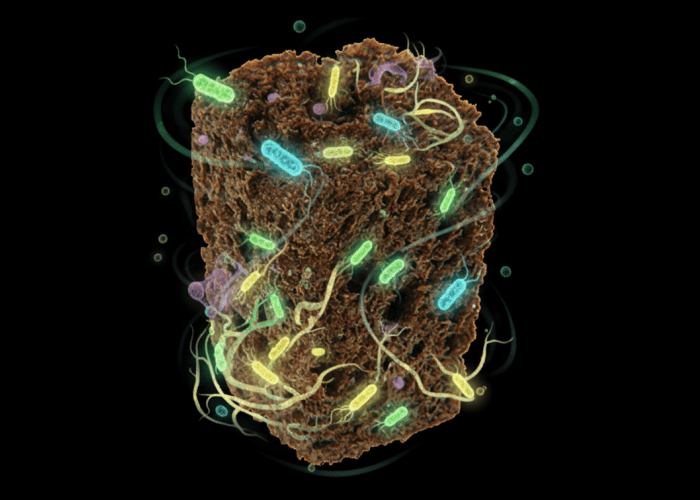
One of the most often overlooked advantages of natural propagation media involves their relationship with beneficial microorganisms. While synthetic media start completely sterile (which manufacturers often highlight as an advantage), natural media often contain or readily support beneficial microbiome development that contributes to plant health through:
- Natural suppression of pathogenic organisms.
- Enhanced nutrient availability through microbial activity.
- Production of plant growth-promoting compounds.
- Establishment of beneficial root symbioses.
Research demonstrates that completely sterile growing environments may leave plants more vulnerable to pathogens when they inevitably appear, while diverse microbiomes help develop resilience. Natural media-based Q and Excel Plugs provide an ideal environment for establishing beneficial microbial communities that support long-term plant health.
The Environmental Impact Consideration
Beyond their direct benefits to plant growth, natural raw materials offer significant environmental advantages:
- Lower embodied energy in production.
- Carbon sequestration potential.
- Utilization of agricultural and forestry byproducts.
- Reduced dependence on petroleum-based inputs.
While synthetic media typically end their lifecycle in landfills, natural media can be composted or recycled into environmental systems, completing a sustainable cycle.
The Biological Imperative in Modern Growing
Modern horticulture is advancing rapidly. Forward-thinking growers understand that real innovation builds on natural systems rather than replacing them. The molecular and biological properties of natural materials are not outdated obstacles; they are refined, efficient systems shaped by evolution, and we are only beginning to understand their full potential.
IHORT’s optimization of the natural characteristics of raw materials represents the ideal integration of biological wisdom and modern technology. Our Q and Excel Plugs show that by working with natural systems instead of against them, we achieve results that synthetic alternatives cannot match.
To grow stronger, healthier plants while conserving resources, growers are returning to what nature has already perfected. Natural materials are not optional—they are essential.